Showing posts with label drapes. Show all posts

Tuesday, April 15, 2014

All You Need to Know About Drapes By Sarah Egge

By Sarah Egge .

Drapes are curtain panels that literally "drape" the window. Typically, they hang on a rod secured across the top of the window and hang straight down. But there are different variations that range from casual to formal. Here's what you need to know about using drapes as window treatments.

Brush the Floor


The current fashion in drapes is two matching tall columns of fabric that flank a window like sentries guarding a palace entrance. When you buy them in stores or online, there are two standard lengths: 84 inches and 95 or 96 inches. The length of the curtain dictates the height of the rod. If you buy 84-inch-long curtains, the rod must be mounted roughly 84 inches from the floor if the curtains hang from the rod without rings. This lets the hem of the curtains brush the floor. How formal or casual they feel depends on the fabric (cotton versus velvet, for example) as well as the hanging mechanism. Oil-rubbed rings on a matching rod have an old-world look, whereas large nickel grommets sliding on a thick rod appear casual.

Puddling


Another style for drapes is extra long panels with inches of fabric "puddling" on the floor, creating a ball-gown effect. This can be an elegant look for fabrics with the right weight and weave, such as synthetics and silks. Stiff fabrics, such as cotton and linen, or any kind of lined panels, won't flow gracefully onto the floor. If you the puddling effect, buy these drapes from a store or online at the 96-inch length but mount the rod between 84 and 90 inches high to give you extra fabric to play with at the floor level.

Pleated and Gathered


The most popular type of drape is the gathered style, which is most commonly available as ready-made drapes. A panel is flat until you clip it to rings or thread it onto a curtain rod. When the panel pulls to the side of the window, the fabric gathers into gentle waves. Another style is the pinch-pleated drape, which is common for custom-made draperies fashioned by drapery workrooms. At the top of the panel, the fabric is pinched into tight pleats at even intervals, which causes the fabric below the pleats to billow out slightly. This is a more formal look and is often used in hotels, banquet halls, and restaurants.

Hemmed Up


Drapes don't have to be long. Some are hemmed to reach a specific point on the window?typically the window sash or just below the bottom of the molding around the window. These window treatments tend to be more casual than long drapes and are often sewn from lightweight fabrics, such as cotton and muslin. If you buy them in a store on online, the typical length for short drapes is 63 inches.

Sunday, September 16, 2012

The Lazy Decorator

The dirty little secrets. Yep, I told you I'm lazy when it comes to some things. I can also be frugal. Sometimes! This post will explain most of it. But let me tell you a story.

In our previous house we had a library with wood folding doors right off the living room. I didn't like them, especially closed, so I disguised them with drapes. When opened, they were tight against the wall, so I took a long length of fabric and tied it off with pretty white rope I bought at the farm store. I didn't hem or sew one single bit of the fabric as I knew we weren't going to live in that house long. (Okay, at first I thought it was our last house but after 7 or 8 years in it, I realized it was just too big for us at 5,000 square feet.) After tying it at the top, I hung it on a cup hook at the top and fanned out the top and poofed out the bottom. I then pinned on some long twisted fringe. Yes, pinned, not sewed. No one, not one single person, who came to our home ever realized they weren't finished off properly. It stayed like that for several years. We lived in that house about 14 years before we finally sold it. Not one person could detect the cheap and easy ways I decorated that home.


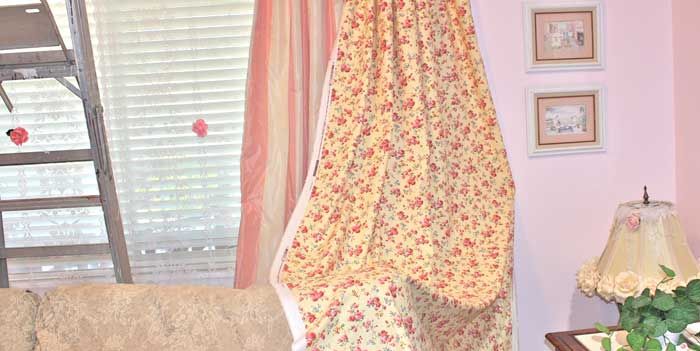
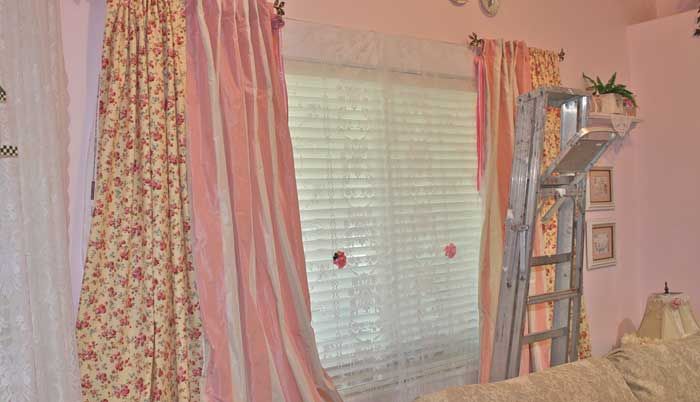
Now on to this house. Here I'm hanging the floral curtain.

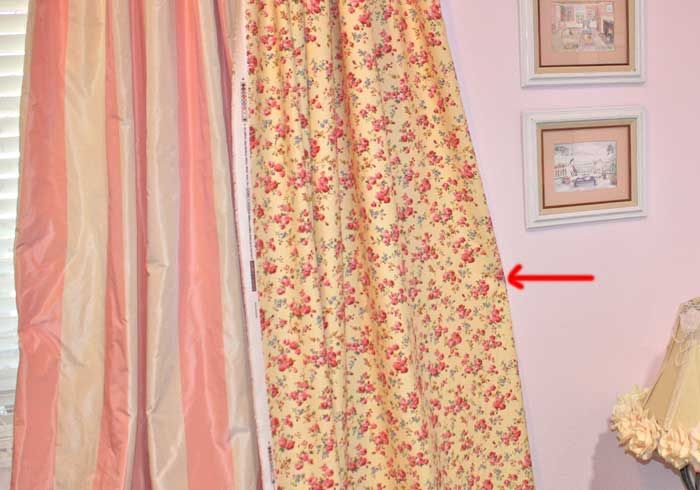
Here you'll notice the selvage edges. I simply tuck them under.

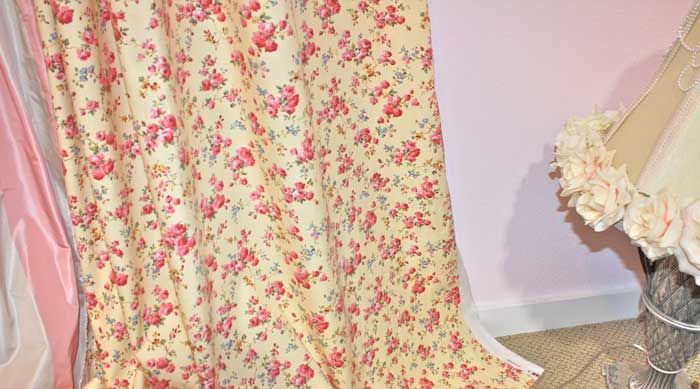
I didn't even both to stitch them up.

Again, I didn't bother hemming them, just puddled them under.

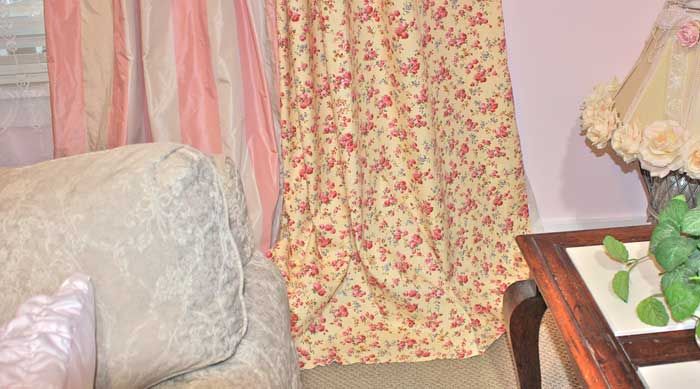
Closer view.

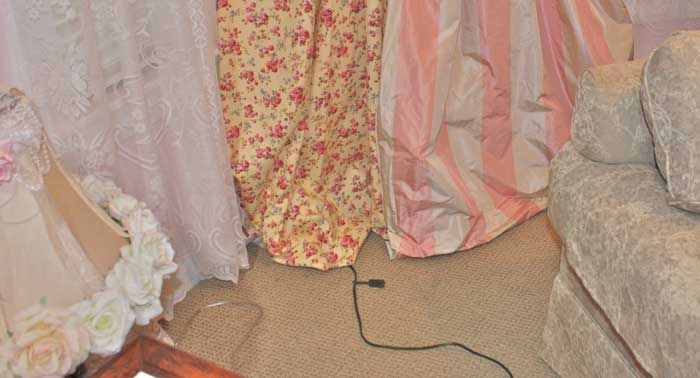
The other side. I have so many cords running under things. I may someday have an electrician put in more outlets. I'd have at least 3 on every long wall.

The selvage can be stitched down of course, but in not doing that I leave my options open to use this fabric another time in another way if I choose to do so. Also, what you can see here by this little red arrow is that I stuck a map pin in to hold it out. My space at the top is severely limited so I cannot make the rod come out to its full potential. But if I anchor them with a tiny invisible pin along the mid-section down then they appear fuller.

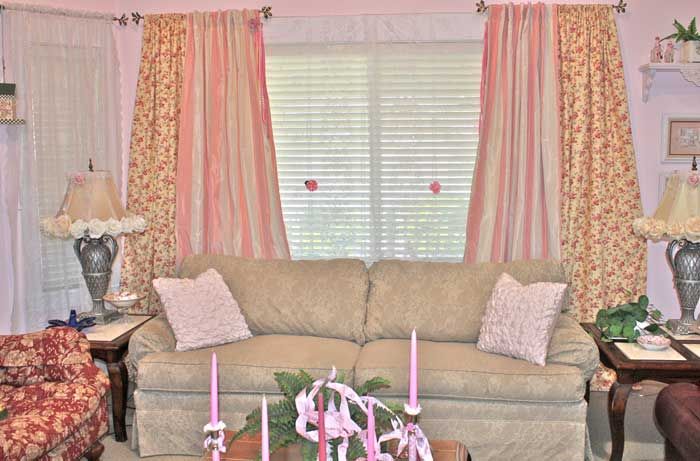
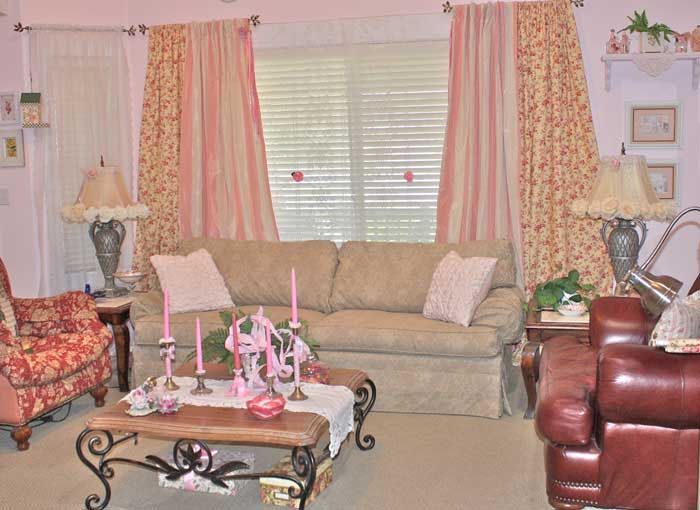
I've leaving the sofa out a bit more because the new sofa will come out about the same. Also, in leaving it out more it gives the curtains more room to billow.

These photos don't even do it justice. It really is gorgeous in that room. Can't wait to see the new sofa in there.

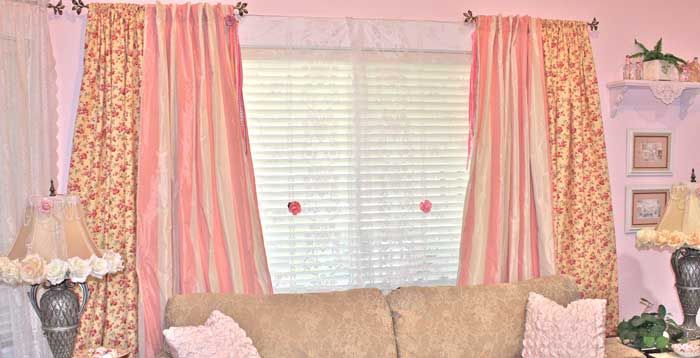
I can also bring the bottom of the pink stripe curtain out a bit to make them appear fuller in the middle. They are now evenly distributed on the window though this photo doesn't show it as well as in person.

I am very pleased with the results.
*
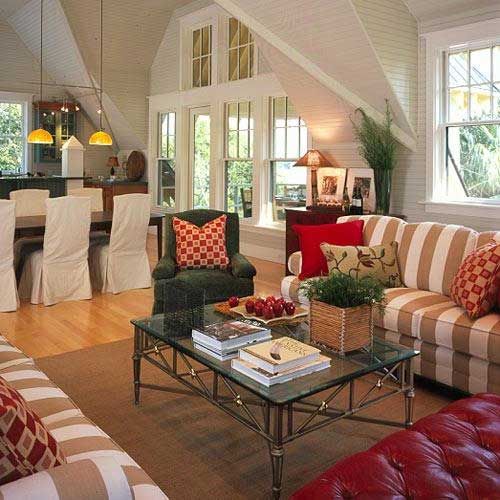
A cute family room off a dining room, but what I found I like about this photo is the siding on the inner walls, the reds and that leather sofa barely visible on the lower side.

Sigh....What a cute little cupboard and dishes.

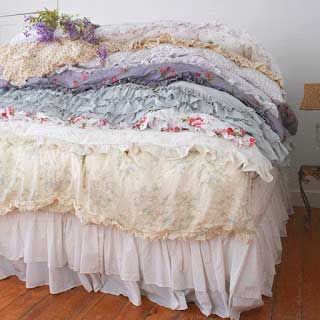
I'm getting ready to order a new ruffled quilt for my bed. This is beautiful but I have no idea where it came from. Mine is coming from a specialty site in California.

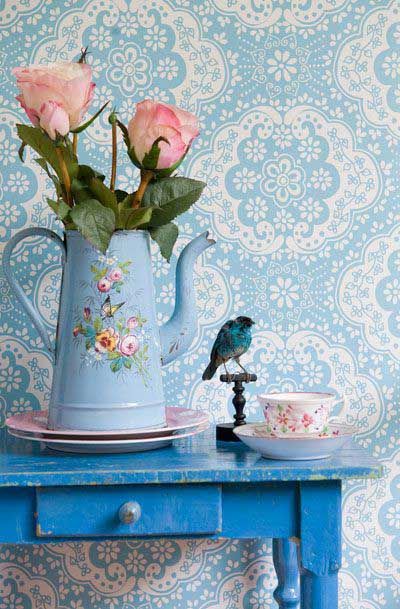
I do like blue and this is one vignette I thought was worthy of note.
~*~
Linking with Make It Pretty Monday and WOW.